
Business Intelligence (BI) has entered a decisive phase in 2026. Organizations are no longer asking whether they need BI, but which kind of BI best aligns with their business goals, cost expectations, deployment preferences, and long-term scalability. The debate between Open Source BI and Commercial BI has become sharper due to rapid advancements in AI, embedded analytics, cloud-native architectures, and stricter data governance requirements.
In this in-depth guide, we compare Open Source BI vs Commercial BI in 2026, focusing on real-world decision criteria such as cost, flexibility, AI readiness, reporting capabilities, embedding, and vendor lock-in. We also highlight Helical Insight, a modern open-source BI platform, to demonstrate how open-source BI has evolved to meet enterprise-grade expectations.
Explore a smarter alternative to commercial BI. try Helical Insight and experience powerful open-source analytics with full control and predictable pricing.
What Is Open Source BI?
Open Source BI refers to business intelligence platforms where the core source code is openly available, allowing organizations to inspect, customize, extend, and self-host the solution. In 2026, open-source BI is no longer limited to basic dashboards or developer-heavy tools. Mature platforms now support:
- Pixel-perfect and operational reporting
- Self-service analytics
- Embedded and white-label BI
- Multi-tenant BI architectures
- Cloud, on-premise, and hybrid deployments
- AI and NLP-driven insights
Examples of open source BI tools include Helical Insight, Metabase (community edition), Apache Superset, and Pentaho (community).
What Is Commercial BI?
Commercial BI tools are proprietary platforms offered by vendors under subscription or license-based pricing models. These tools typically emphasize ease of use, polished UI, and managed cloud services.
In 2026, leading commercial BI platforms focus on:
- AI-assisted dashboards
- Natural language querying
- Auto-insights and forecasting
- Tight ecosystem integrations
- SaaS-first deployments
Popular commercial BI tools include Tableau, Power BI, Qlik, Looker, and ThoughtSpot.
Key Differences: Open Source BI vs Commercial BI vs Helical Insight (2026)
Use Cases Where Open Source BI Wins in 2026
Open Source BI is the better choice when:
- You want to avoid vendor lock-in
- You need embedded or white-label analytics
- You require pixel perfect reporting.
- You need unlimited users
- You want full customization
- You operate in regulated industries
Why Helical Insight Is a Leading Open Source BI Platform in 2026
Helical Insight stands out by bridging the gap between traditional open-source BI and enterprise commercial BI.
Key strengths of Helical Insight:
- Open-source core with enterprise-grade features
- Pixel-perfect and ad hoc reporting
- Embedded and white-label BI
- Flat pricing with unlimited users
- NLP-based self-service BI
- Workflow-driven analytics
- Cross-database support
- On-premise, cloud, and hybrid deployment
For organizations looking for a future-proof BI platform, Helical Insight offers the flexibility of open source with the reliability of enterprise BI—register for a free demo or free POC today.
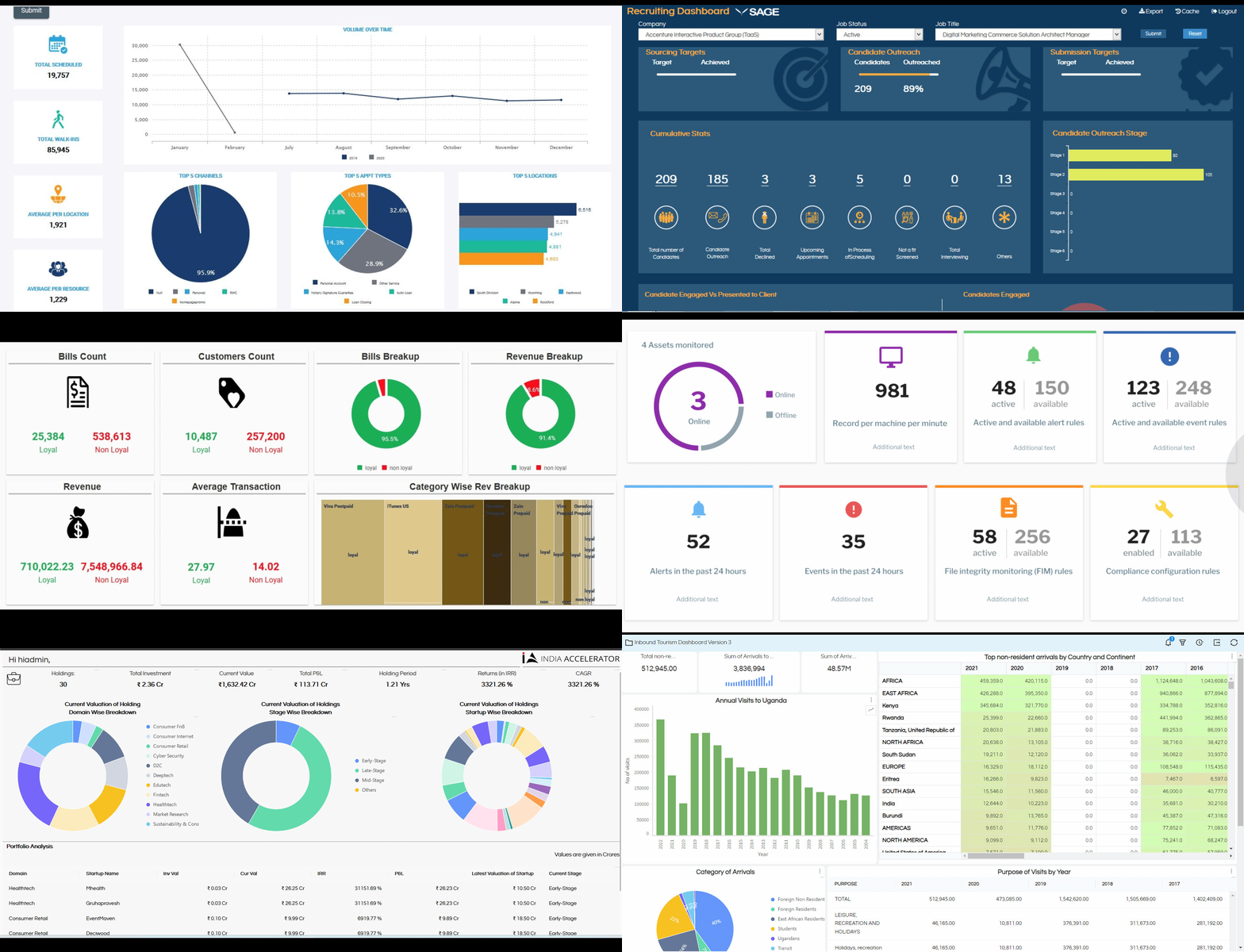
FAQs: Open Source BI vs Commercial BI (2026)
What is the main difference between Commercial BI and Open Source BI?
The main difference is ownership and cost control. Commercial BI tools are proprietary and charge per user, while Open Source BI gives you full control, customization, and predictable costs. Tools like Helical Insight combine open-source flexibility with enterprise-grade features.
Is Open Source BI reliable for enterprise use in 2026?
Yes. In 2026, modern open-source BI platforms are highly reliable and used by enterprises worldwide. Solutions like Helical Insight offer security, scalability, pixel-perfect reporting, and enterprise support comparable to commercial BI tools.
Why are companies moving away from Commercial BI tools?
Many companies are moving away due to high licensing costs, vendor lock-in, limited customization, and expensive embedding options. Open-source platforms such as Helical Insight provide more freedom, lower long-term costs, and better control.
Which is more cost-effective: Commercial BI or Open Source BI?
Open Source BI is generally more cost-effective, especially for growing teams and SaaS companies. Commercial BI pricing increases with users and features, while platforms like Helical Insight offer flat pricing with unlimited users and embedding.
Can Open Source BI tools replace Tableau, Power BI, or Qlik?
Yes. Many Open Source BI tools can fully replace Tableau, Power BI, or Qlik for dashboards, reporting, and embedded analytics. Helical Insight stands out by offering both self-service dashboards and pixel-perfect reports in one platform.
Is Open Source BI good for embedded analytics and SaaS products?
Absolutely. Open Source BI is often better suited for embedded analytics because it avoids per-user licensing. Helical Insight is specifically designed for embedded and white-label BI, making it ideal for SaaS and product companies.
Explore a smarter alternative to commercial BI. try Helical Insight and experience powerful open-source analytics with full control and predictable pricing.
Do Open Source BI tools support pixel-perfect and operational reports?
Yes. Unlike many commercial BI tools that focus mainly on dashboards, advanced open-source BI platforms like Helical Insight support pixel-perfect, scheduled, burst, and regulatory reports along with dashboards.
How does vendor lock-in affect Commercial BI users?
Vendor lock-in makes migration difficult, increases switching costs, and limits customization. Open Source BI eliminates this risk. With Helical Insight, organizations retain full ownership of data, metadata, and BI logic.
Can Open Source BI support AI, NLP, and LLM-based analytics?
Yes. Open Source BI allows better control over AI and NLP integrations. Helical Insight supports NLP-based BI and can integrate with LLMs while keeping AI explainable and under enterprise control.
Which is the best Open Source BI alternative to Commercial BI in 2026?
Several tools exist, but Helical Insight is considered one of the best Open Source BI alternatives in 2026 due to its flat pricing, embedded analytics, pixel-perfect reporting, deployment flexibility, and enterprise-ready architecture.
