
Introduction
This guide explains how to prepare a Windows system for deploying Helical Insight using Docker.
Helical Insight runs as Linux-based Docker containers. While Docker Desktop allows these containers to run on Windows, the best performance is achieved by using Windows Subsystem for Linux 2 (WSL2) with an Ubuntu distribution. Running the deployment from the Ubuntu filesystem significantly reduces filesystem overhead and provides performance comparable to a native Linux environment.
This guide walks you through:
- Installing WSL2 (if not already installed)
- Installing and configuring Ubuntu
- Creating a deployment directory inside the Ubuntu filesystem
- Copying and extracting the Helical Insight Docker package
- Installing Docker Desktop
- Enabling WSL integration with Docker Desktop
ver
After completing this guide, your Windows environment will be ready for deploying Helical Insight using the Installation via Docker of Open Source BI Helical Insight.
Note: This guide is intended only for Windows users. Linux and macOS users can proceed directly with the Installation via Docker of Open Source BI Helical Insight.
Why Use WSL2?
Docker Desktop stores Linux containers inside the WSL2 environment.
When Helical Insight is deployed from the Windows filesystem (for example, C:\Users\… or /mnt/c/…), filesystem operations are significantly slower because every file operation crosses the Windows–Linux boundary.
This can increase deployment time considerably.
Deploying directly from the Ubuntu filesystem inside WSL2 provides performance comparable to a native Linux installation.
Recommendation
For this reason, Helical Insight recommends performing Docker deployments from the Ubuntu filesystem whenever Windows is used.
1. Install WSL2
If WSL2 is not already installed, open PowerShell as Administrator and execute:
This install:
- WSL2
- Ubuntu
- Required Linux kernel components
Restart the machine if prompted.
If WSL is already installed, update it using:
Verify WSL Installation
Run:
Installation via Docker of Open Source BI Helical Insight
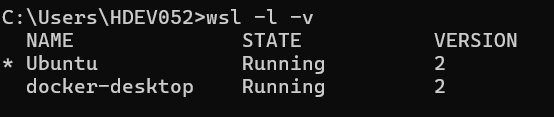
Verify that:
- Ubuntu is installed.
- Version is 2.
2. Install Ubuntu Distribution
Install Ubuntu from the Microsoft Store if it is not already installed, then launch it after installation.
3. Create a User in Ubuntu
During the first launch, Ubuntu will prompt you to create a username and password. Use these credentials to access the Ubuntu terminal.
Note: Open Ubuntu Terminal
4. Create Deployment Directory
Inside the Ubuntu terminal, create a directory for deployment:

5. Copy and UNZIP Application Files via Windows File Explorer
Open Windows File Explorer and navigate to the WSL Ubuntu path below. Copy the downloaded Helical Insight ZIP into this folder, then unzip it here inside the Ubuntu filesystem:

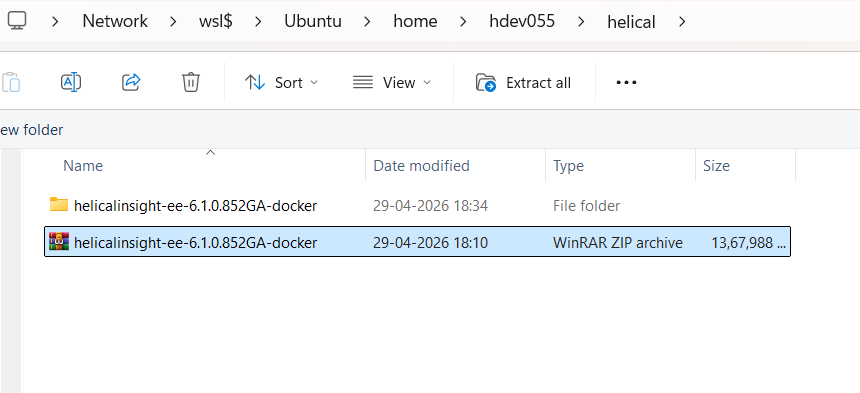
Note: Do NOT run the deployment from the Windows filesystem path such as /mnt/c/Users/… Always use the Ubuntu filesystem (/home/<username>/helical) for optimal Docker performance.
6. Install Docker Desktop
Install Docker Desktop using the standard installer.
After installation:
- Start Docker Desktop.
- Wait until Docker is running successfully.
7. Enable WSL Integration
Open Docker Desktop.
Navigate to:
Enable integration for your Ubuntu distribution.
This allows Docker Desktop to access the Linux filesystem directly through WSL2.
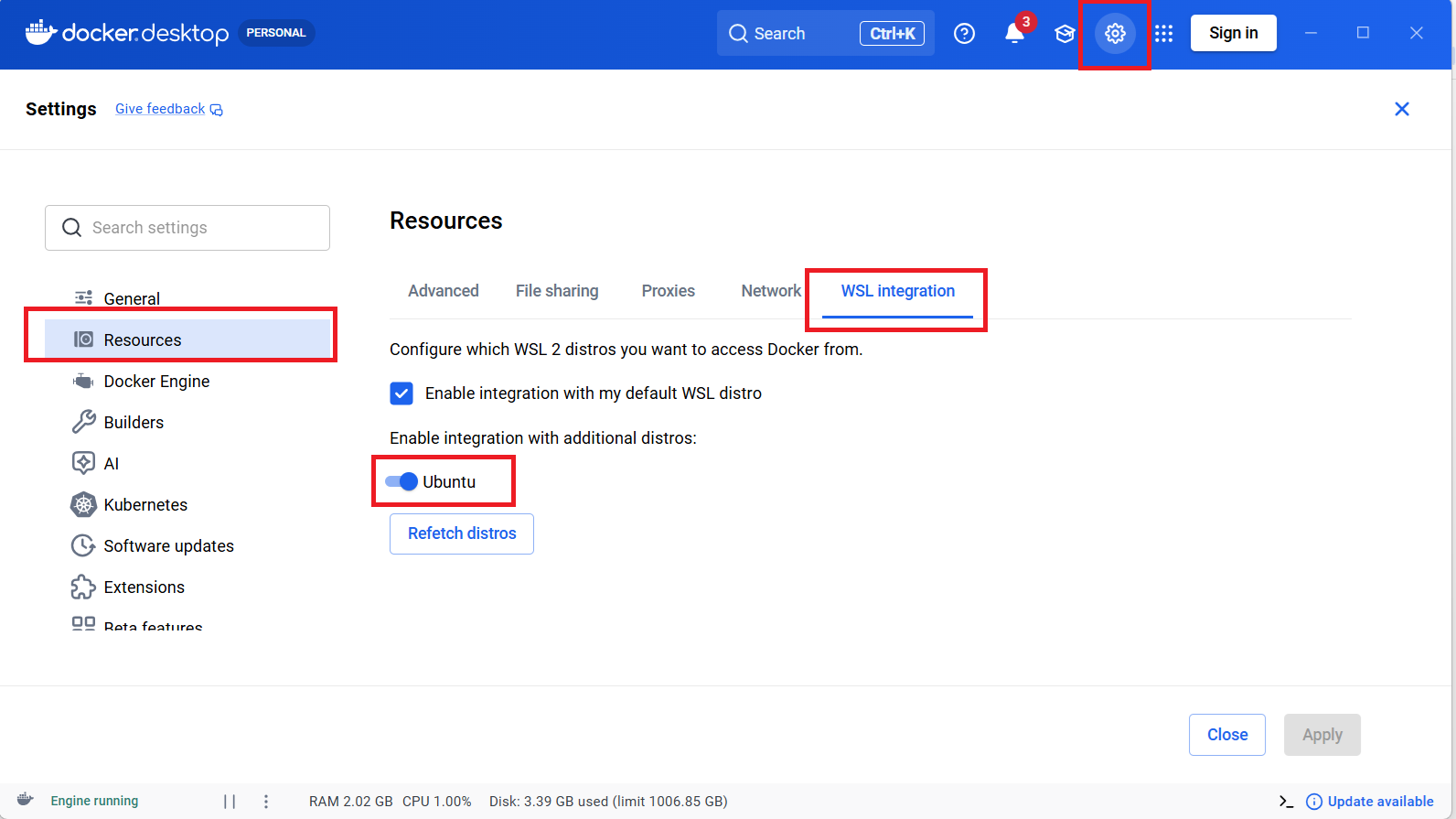
Docker Desktop
Docker Desktop → Settings → Resources → WSL Integration — enable the Ubuntu toggle for Ubuntu as shown
Conclusion
Your Windows environment is now prepared for deploying Helical Insight using Docker.
By completing this guide, you have:
- Installed and configured WSL2 with Ubuntu.
- Prepared a deployment directory inside the Ubuntu filesystem.
- Installed Docker Desktop.
- Enabled Docker Desktop integration with WSL2.
- Configured your environment to run Docker containers with optimal filesystem performance.
You are now ready to deploy Helical Insight.
Continue with the Installation via Docker of Open Source BI Helical Insight, which covers:
- Downloading the Helical Insight Docker deployment package.
- Reviewing the deployment configuration.
- Starting the Docker deployment using docker compose up -d.
- Verifying that all containers are running and healthy.
- Accessing the Helical Insight application.
Final Note
Following the installation guide will complete your Helical Insight deployment on Windows.
